
Good Coffee, Great Coffee
TapBlazeSimulation
4.32.93K Reviews
- Version
- 1.20.1
- Installs
- 10.00M
- Age Rating
- Everyone
Screenshots
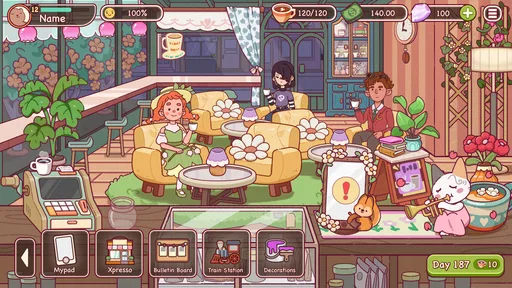
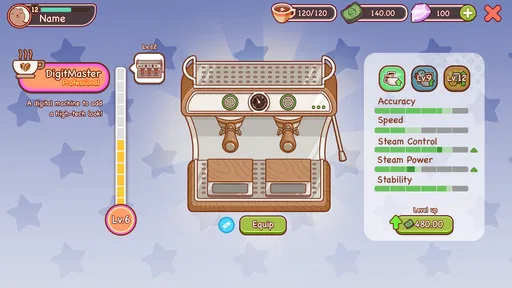

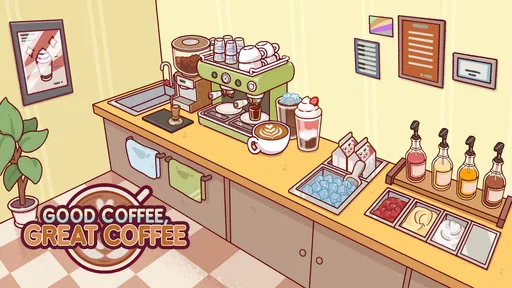
Our Review of Good Coffee, Great Coffee
 Analysis by Appyee
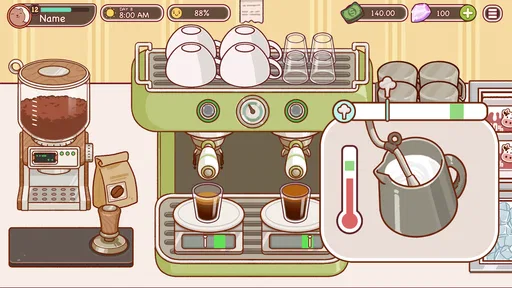
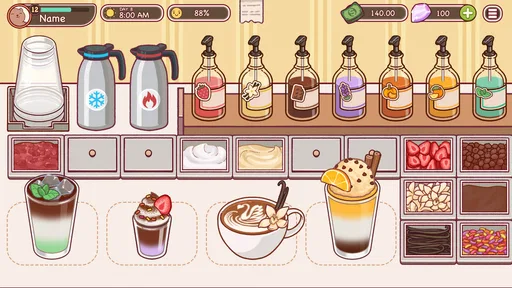
I noticed the appeal of Good Coffee, Great Coffee almost immediately: it turns making a drink into a small, repeatable routine. I take an order, prepare the coffee, watch the customer react, collect the result, and then start again with a new request. That sounds simple, but the timing of each step gives the game a surprisingly pleasant rhythm. It feels less like managing a complicated business and more like spending a few quiet minutes behind a counter where every cup gives me something to improve.
This is a free simulation game from TapBlaze, aimed at Everyone, and it has found a sizeable audience with a 4.3 average from around 130 thousand ratings and more than 10 million installs. I can see why it travels well on a phone: the basic actions are easy to understand, the sessions are naturally bite-sized, and the coffee-shop setting gives the whole experience a warm personality. Still, it is not a deep restaurant-management simulator, and players looking for elaborate menus, staff scheduling, or a highly strategic economy may eventually want something more demanding.
From the first cup to the next customer
I focus on what makes the first orders easy to follow, and on the small habit that helps me avoid rushing into a mistake: taking in the whole request before starting the drink. That gives the customer’s reaction a purpose beyond simply marking the end of a turn. From there, I look at how the next order becomes a fresh chance to use what I’ve learned.
The first action is easy to understand
The strongest part of the opening experience is that I do not need a long explanation before I can play. A customer arrives with a request, and my job is to translate that request into a drink. The fun comes from handling the order rather than simply tapping a button marked “serve.” I have to pay attention to what the customer wants, choose the relevant preparation steps, and finish the cup in a way that matches the request.
That direct connection between instruction and action makes the game approachable for people who have never played a cooking simulator. I can begin with the obvious goal—make the coffee correctly—and gradually become more comfortable with the order flow. The controls are designed for a touch screen, so the experience feels natural on a phone rather than like a desktop management game squeezed into a smaller display.
What I like most is that the first action has a clear consequence. If I rush and overlook part of an order, the finished drink does not feel like a success merely because I completed the sequence. If I slow down and read carefully, I have a better chance of satisfying the customer. That makes attention itself part of the gameplay, which is more engaging than a cooking game where every recipe is effectively automatic.
Why the feedback rhythm keeps me playing
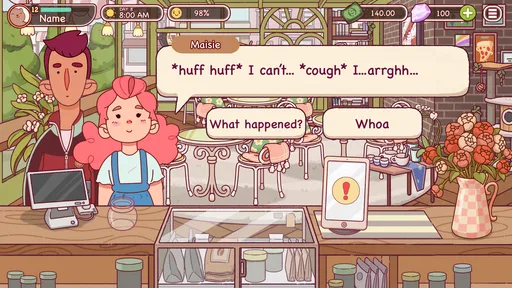
After serving a drink, I receive a reaction that helps me understand how well I handled the request. This feedback is the center of the experience. The game gives me a reason to remember what went wrong, adjust my approach, and try to perform better on the next order. I am not just moving through a queue; I am learning the relationship between the customer’s wording, my preparation choices, and the result at the counter.
The rhythm is especially effective during short play sessions. I can open the game while waiting for a bus or taking a break, complete a few orders, and stop without feeling that I have abandoned a long strategic plan. Each order acts as a compact challenge with its own beginning and end. The next customer then provides a fresh variation, which prevents the basic preparation process from feeling completely static.
There is also a useful tension between speed and care. Moving quickly feels satisfying, but coffee-making is not only about finishing first. I have to keep the request in mind while interacting with the preparation tools. This creates a small mental checklist: read, prepare, verify, serve. I recommend treating that checklist as part of the game rather than trying to play by instinct. It reduces avoidable mistakes and makes the improvement curve feel earned.
A practical tip is to read the entire order before touching anything. When I act on the first recognizable word, I am more likely to forget an additional requirement later in the request. Taking a moment to identify the drink and its details makes the whole sequence calmer. That habit is one of the game’s less obvious strengths: it rewards careful observation without turning the experience into a stressful test.
The reward is more than finishing a recipe
Completing an order gives the session a sense of progress, but the more important reward is the feeling that I handled the next request better than the previous one. A good result confirms that I understood the customer and used the preparation process correctly. A weaker result gives me a clear reason to adjust. That action-feedback-reward connection is what turns a simple coffee task into a repeatable game loop.
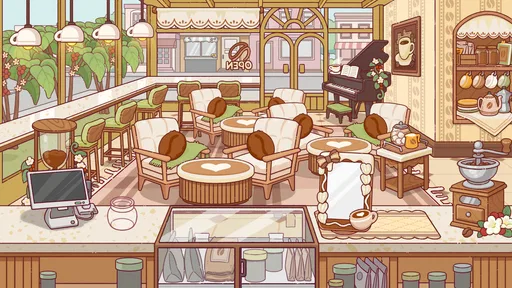
The cozy presentation helps here. The setting makes improvement feel gentle rather than punishing. Even when I make a mistake, the game’s central idea remains inviting: try another cup, pay closer attention, and see whether the next customer is happier. This tone makes it suitable for casual players who want a relaxing simulation rather than constant pressure.
At the same time, the reward structure may not satisfy everyone equally. If you need dramatic unlocks, complex resource planning, or a strong competitive layer, the satisfaction of preparing a better drink may feel too modest. The game’s pleasure is incremental. It comes from mastering the interaction and maintaining a good flow, not from building an enormous virtual company.
The presence of in-app purchases, ranging from $0.99 to $99.99 per item, is worth keeping in mind before settling into longer play. The game is free to start, but players who are sensitive to optional spending should decide in advance how they want to approach it. I would treat the purchases as something to evaluate carefully rather than assuming they are necessary for enjoying the basic coffee-making loop.
How a normal session resets itself
One reason I keep returning is that a completed order does not close the experience. It resets the situation. The previous customer leaves, a new request appears, and I get another opportunity to apply what I just learned. That reset is important because it prevents one mistake from defining the whole session. I can make an imperfect cup, understand the problem, and immediately test a better method on the next order.
This works well for everyday use. Imagine having ten minutes before an appointment. I can play through a handful of customers, stop after a natural break, and return later without needing to remember a complicated chain of decisions. The game’s structure supports that kind of fragmented play better than a traditional restaurant simulator that expects me to manage a large operation over a long uninterrupted period.
The reset also gives the game a low barrier to replay. I do not need a special occasion to return. A spare moment is enough because the next task is self-contained. That quality makes it a good fit for players who enjoy routine-based games, especially if they like the idea of improving through repetition rather than chasing a single dramatic objective.
However, the same reset can feel repetitive if I am not interested in refining small actions. The game depends on the charm of making another drink remaining stronger than the feeling of doing the same kind of work again. Players who prefer constant novelty may find the loop settles into a familiar pattern. In my experience, it is best approached as a cozy practice game, not as a story-heavy adventure with a completely different challenge every few minutes.
Small habits that make the coffee counter smoother
I found that the most useful improvement was not trying to play faster. It was creating a consistent order of operations. I read the request, identify the main drink, check for the other details, prepare each part deliberately, and only then serve it. This workflow reduces the chance of confusing one customer’s request with the next and makes the feedback easier to interpret when something goes wrong.
Another helpful habit is to use mistakes diagnostically. If a customer reacts poorly, I do not simply label the order a failure. I ask which part of the process I may have misunderstood. Did I overlook a detail? Did I stop the preparation too early? Did I serve before checking the finished cup? Thinking this way turns feedback into a lesson and gives the next order a purpose beyond earning another reward.
I also recommend playing with sound and interruptions in mind. Because the game relies on reading requests and following a sequence, a distracted session can be less satisfying than a quiet one. If I am constantly switching between the game and messages, I am more likely to miss a detail and blame the controls for an attention problem. A focused few minutes usually produces a better experience than a longer but fragmented session.
These habits reveal a trade-off that is easy to miss in a short store description. The game is accessible, but it is not entirely mindless. It asks for enough concentration to make the customer feedback meaningful. That balance is why it works for me as a relaxing game, though someone seeking a purely idle experience may prefer a title where progress happens with minimal interaction.
Where it fits among cooking and business simulations
Compared with larger restaurant-management games, this one keeps its attention close to the cup. I am not primarily worrying about staffing, seating layouts, supply chains, or a broad menu economy. The focus is the preparation interaction and the customer’s response. That narrower scope makes it easier to pick up, but it also means the game offers less room for players who enjoy optimizing an entire business.
Compared with idle cafe games, it asks more from me. I cannot simply check in, collect progress, and leave the game to run. My decisions during each order matter, and the feedback encourages me to improve how I handle the next request. That makes it more engaging than an automated management loop, although it also means I need to be present rather than treating the app as a background activity.
It also differs from high-pressure cooking games that depend on frantic multitasking. The coffee-shop format feels more measured. I can concentrate on understanding the order and carrying out the preparation instead of constantly racing against a crowded kitchen. If you enjoy calm repetition with a small skill component, this is likely a better match than a chaotic time-management title.
On the other hand, players who want a rich narrative, detailed customization, or a realistic professional coffee simulator should set their expectations accordingly. The appeal is the compact loop: action, reaction, reward, and reset. It is not trying to replace every other kind of cafe game, and I think it is more enjoyable when judged on that focused goal.
Who should try it and who should skip it
I would recommend it to someone who wants a free mobile simulation game that can be played in short bursts. It is particularly suitable for players who enjoy learning a simple process, spotting patterns in customer requests, and gradually becoming more consistent. The Everyone rating also makes it an approachable choice for a broad audience, provided the player is comfortable with optional in-app purchases.
It is a good companion for a quiet break, a short commute, or the end of the day when I want interaction without an exhausting challenge. The coffee theme gives it a softer identity than many restaurant games, and the repeated customer cycle makes it easy to stop after a satisfying run of orders.
I would skip it if my priority is deep economic strategy. Someone who wants to design a complex cafe, control a large staff, or make long-term operational decisions may find the focus too narrow. I would also look elsewhere if I need a game with a strong competitive component or a large amount of constantly changing content. The core pleasure depends on enjoying the preparation itself and the small improvements that follow.
Device details and long-term expectations
The game was released on February 27, 2025, and the current version is 1.20.1. It supports Android 7.1 and later, which makes it accessible on a wide range of devices. TapBlaze has positioned it as a free download, so trying the basic experience does not require an upfront purchase. That combination makes it easy to test whether the coffee-making loop suits your taste before committing time to it.
The large install base suggests that the format has broad appeal, while the average rating of 4.3 indicates that many players find the experience enjoyable. I would still use those figures as a starting point rather than a guarantee. A player who likes cozy, hands-on repetition may rate it highly, while someone expecting a full cafe-management system may feel differently even after a short trial.
For longer-term play, the key question is whether improving order accuracy remains rewarding. The game gives me a reason to begin another session because every new request is a chance to apply what I learned. If that kind of modest mastery is satisfying to you, the loop can remain comfortable and inviting. If you need a constant stream of major objectives, the same structure may eventually feel too familiar.
My verdict on the complete loop
Good Coffee, Great Coffee succeeds because it understands the value of a small task done well. I take an order, prepare the drink, receive a reaction, and use that result to approach the next customer more carefully. The reward is not only progress; it is the feeling that my hands and attention are becoming more reliable. Then the session resets, giving me a clean reason to continue without demanding a lengthy commitment.
That loop is simple, but it is not empty. The best way to enjoy it is to slow down enough to read each request, follow a repeatable workflow, and treat customer reactions as useful feedback rather than decoration. Those choices make the game feel more skillful than its cozy presentation first suggests.
My final recommendation is positive, with a clear condition: choose it for focused coffee-making sessions, not for a deep restaurant empire. It is free, approachable, and easy to fit into everyday breaks, while its main limitation is the narrowness that makes it accessible in the first place. If you enjoy calm repetition, small improvements, and a satisfying reset after every order, this is a worthwhile cafe simulation to keep on your phone.
Verdict
Strengths of Good Coffee, Great Coffee
- Relaxing gameplay with a cozy café atmosphere.
- Simple controls make it easy to pick up and play.
- Creative drink customization keeps orders feeling personal.
- Short customer interactions suit quick gaming sessions.
- Charming art style and animations add personality to the café.
Limitations of Good Coffee, Great Coffee
- Some orders can feel repetitive after extended play.
- Progress may feel slow without spending more time in-game.
- Mistakes can be frustrating when several requests arrive together.
- The game may become less challenging for experienced players.
- Requires patience while serving customers and unlocking new content.
Other Releases by TapBlaze
View All
Good Pizza, Great Pizza
Casual4.7
Similar Picks in This Category
View All
Truckers of Europe 3
Wanda Software4.3

Town Building Life Simulator
XGame Global4.2

Fidget Toys Trading・Pop It 3D
Freeplay Inc4.7

Sculpt People
CrazyLabs LTD4.4

Scary Teacher 3D
Z & K Games4.2

Hair Tattoo: Barber Shop Game
CASUAL AZUR GAMES4.3
Frequently Asked Questions
What is Good Coffee, Great Coffee?
Good Coffee, Great Coffee is a relaxing café-management and simulation game where you prepare drinks, serve customers, and gradually improve your coffee shop. You take orders, choose ingredients, adjust recipes, and try to satisfy different personalities with specific preferences. Its friendly presentation and simple controls make it approachable, while later orders add more challenge and require careful attention.
Is Good Coffee, Great Coffee free to download and play?
The game can generally be downloaded for free, but it may include optional in-app purchases and advertising. These purchases can provide extra resources, convenience, or cosmetic benefits, depending on the version available on your device. You can play without spending money, although progress may feel slower at certain points. Check the store listing for the current pricing and purchase details.
Does Good Coffee, Great Coffee require an internet connection?
An internet connection may be needed for the initial download, advertisements, cloud features, updates, and in-app purchases. Some gameplay elements may work offline, but the experience can vary depending on your device and the installed version. If you plan to play while traveling or without reliable data, test the game offline first because certain rewards or features may not be available.
Is Good Coffee, Great Coffee suitable for children?
Good Coffee, Great Coffee is generally easy to understand and does not rely on complicated controls, making it suitable for many younger players. However, parents should review the age rating, advertising, and in-app purchase settings before allowing children to play. The game may also encourage repeated sessions through progression systems, so parental controls can help manage spending and screen time.
What are the main advantages and disadvantages of Good Coffee, Great Coffee?
The game’s main strengths are its charming café atmosphere, accessible gameplay, creative drink preparation, and customer-focused story moments. It is satisfying to improve recipes and learn what different customers want. On the other hand, some players may find advertisements, energy or resource limits, and repeated tasks frustrating. Progress can also become slower if you avoid optional purchases, particularly during longer play sessions.
Play our best games!


